The answer to how often does septic tank need to be emptied depends on tank size, household use, and system condition. No one schedule fits every home. A septic professional can check the system and help set a pumping plan that suits your property in Athens.
Table of Contents
- How often does a septic tank need to be emptied?
- What affects how often a septic tank needs pumping?
- Which septic maintenance tasks can homeowners do?
- How should you prepare for a septic tank pumping?
- What can go wrong if a septic tank is not pumped on time?
- What signs may mean a septic tank needs attention?
- When should you call a septic professional?
How often does a septic tank need to be emptied?
There is no set pumping schedule that works for every home. The right time depends on tank size, the number of people using it, daily water use, and how well the system works. A busy home may need a different plan from a home with fewer people.
A septic tank holds wastewater from the home. Heavy solids settle at the bottom, while oils and lighter waste float near the top. The liquid between these layers flows to the drainfield, where soil helps treat it. Pumping takes out built-up solids before they can affect this process.
Why there is no single schedule for every household. More people in a home often means more water and waste entering the tank. Frequent laundry, long showers, and leaking toilets can add to the load. Tank size matters as well. A larger tank can hold more waste, but it still needs care based on its condition.
The number of bedrooms can help show how much use a home may get, but it does not tell the whole story. A three-bedroom home with many residents may see more use than a home with fewer people. The system’s design and care history matter, too.
How a septic inspection helps set timing. An inspection checks the tank and the rest of the system. A trained worker can measure waste layers and review past care records. That gives the owner a plan based on what the system needs, rather than a guess or a backup.
Homeowners in Athens can keep inspection and pumping records together. Septic Tank Pumping Athens can help local property owners learn what their system needs and plan regular care. Ask the worker to explain the results in clear words. Make a note of when the system should be checked again.
What affects how often a septic tank needs pumping?
Household size, daily water use, tank capacity, and system condition all affect pumping time. No one factor gives the full answer. A good plan looks at how the home is used and what an inspection finds.
Household size and water use. More people usually send more wastewater into the tank. Water use may rise when guests stay, laundry runs often, or several taps are used at once. Leaks matter, too. A toilet that keeps running can send water into the system all day without anyone noticing.
Spacing out tasks that use a lot of water can help limit sudden surges. For example, a household can avoid doing many loads of laundry one after another. This does not take the place of pumping or an inspection. It can help ease the load on the system.
Tank capacity, wastewater habits, and system condition. Tank capacity affects how much wastewater the tank can hold. The right size depends on the system’s design and the home’s expected use. A septic worker can explain the tank’s capacity and how it fits the household.
The tank and drainfield condition matter, too. A system with damage, poor drainage, or past backups may need closer checks. The drainfield is the area where wastewater leaves the tank and filters into the soil. Keep heavy vehicles and buildings off this area.
Some owners look up septic tank replacement or septic system replacement when problems arise. Replacement is not the same as regular pumping. Whether a system needs replacement depends on the kind and amount of damage, access, and the work involved. An inspection can help find the cause before an owner makes plans.
Keep notes about changes in the home, repairs, inspections, and pumping. Septic Tank Pumping Athens can review that history with property owners in the Athens area, including Downtown Athens, Watkinsville, Bogart, Bishop, and Winterville. A clear record can help the worker explain what the system may need next.
Which septic maintenance tasks can homeowners do?
Homeowners can keep records, use water with care, and protect the ground above the drainfield. These simple steps do not need a professional. Opening a tank, entering it, or trying to fix buried parts is not safe work for a homeowner.
Keep records and watch for changes around the system. Write down when the system was inspected, pumped, or repaired. Keep a system plan and property records with these notes. This can help a new owner or tenant learn what work was done and when the system was last checked.
Homeowners can also look at the yard from a safe place. Watch for wet ground, bad smells, or new trouble with household drains. Do not lift a heavy tank cover to look inside. Septic tanks can hold dangerous gases, and covers may be unsafe to move without the right tools.
Use water carefully and protect the drainfield. Fix dripping taps and toilets that keep running. Spread water use through the day instead of sending a large amount into the system at once. Follow the directions on cleaning products. Do not pour grease, paint, medicine, or harsh chemicals down the drains.
Keep vehicles, sheds, and heavy tools off the drainfield. Do not plant trees or shrubs where roots may reach pipes. Keep roof water and yard runoff away from the tank and drainfield. These steps help protect the soil and the parts that treat wastewater.
Homeowners usually do not need a professional for these simple habits. But pumping, checks inside the tank, and system repairs should be done by trained workers. No one should enter a septic tank, even if it seems empty. Septic Tank Pumping Athens can explain safe care and which jobs need a worker.
How should you prepare for a septic tank pumping?
Before pumping, gather system records, find the tank if its location is known, and clear the way to it. The worker handles the tank and checks the system as agreed. Homeowners should not open or enter the tank themselves.
Locate the tank and provide access. Look for a property plan, old inspection notes, or records from a past owner. These may show where the tank and drainfield are. If you do not know where they are, do not dig at random. A worker can help find the system without risking damage.
People often ask how to find a buried septic tank or how deep it is. The answer changes from one property and system to another. The ground above a tank may look like the rest of the yard. A septic tank riser is an access point that reaches closer to the surface, if the system has one. A worker can tell you whether there is a riser and where it sits.
Keep the path to the tank clear of parked cars, stored items, and other blocks. Tell the service worker about gates, pets, or other things that may affect safe access. Do not remove a lid or cover unless the worker asks and gives safe directions.
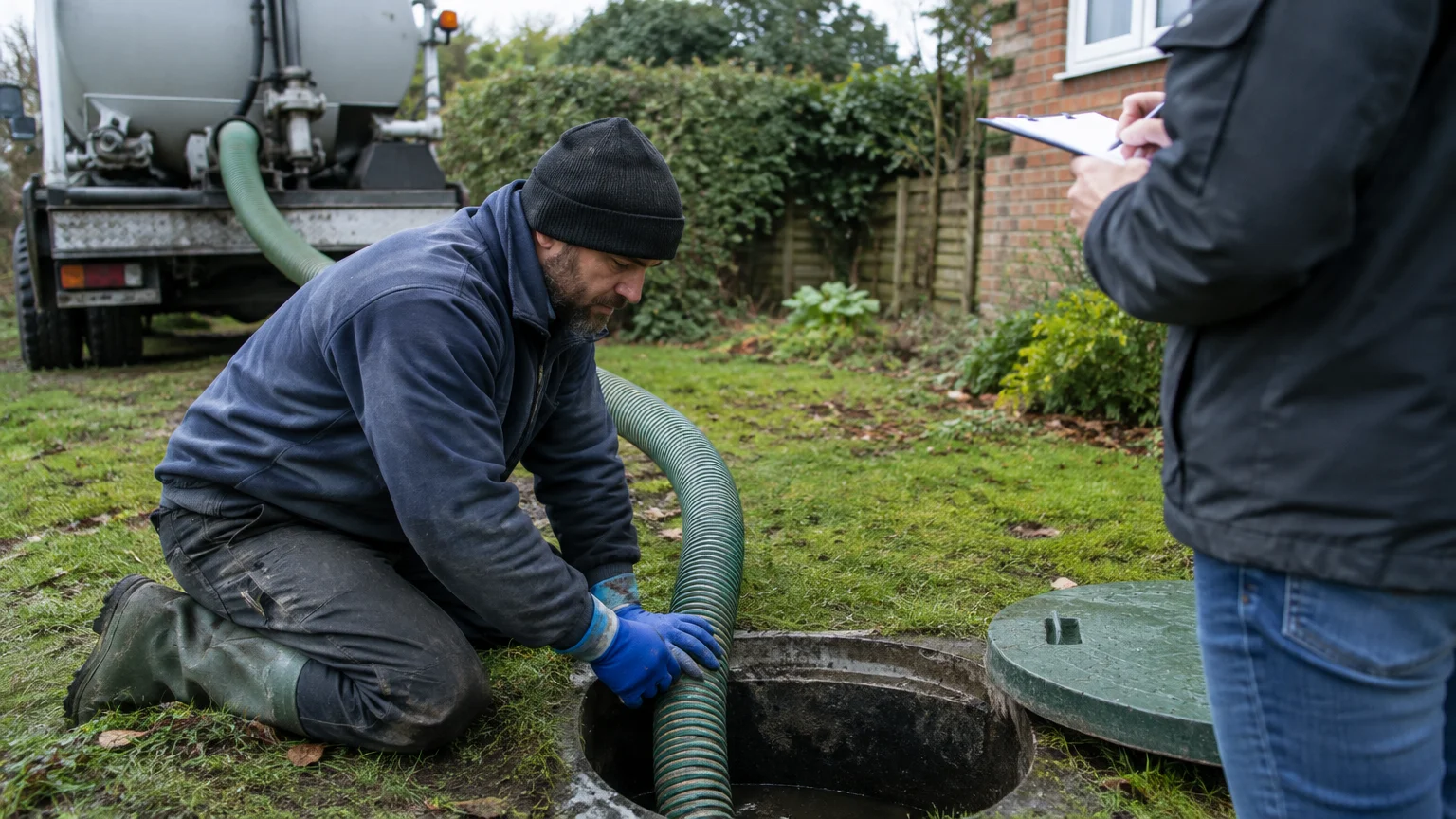
What to expect during a professional pump-out. The worker will reach the tank with proper equipment and remove built-up solids. The worker may also check the tank or note signs of a concern. Ask what they found and which records you should keep.
Pumping does not fix a broken tank or damaged drainfield. It is one part of regular care. If the worker finds a problem, ask what it means and what step should come next. Keep the report with the home’s septic records so future owners or tenants can follow the system’s history.
What can go wrong if a septic tank is not pumped on time?
When too many solids build up, they can leave the tank and reach the drainfield. This may block spaces in the soil that help treat wastewater. Waiting too long can also lead to slow drains, sewage smells, or wastewater inside the home.
Solids can reach the drainfield. The tank is made to hold solid waste while liquid flows onward. If the tank is too full or the system is not working well, more solids may leave the tank. The drainfield may then have trouble taking in and treating wastewater.
A drainfield problem may not be easy to see at first. Wet ground or a change in the yard can be a warning. Do not drive or park there to check. Heavy loads can harm buried pipes or press down the soil.
Backups, damage, and trouble at home. When a system cannot move wastewater well, drains may slow down or back up. Wastewater can be harmful, so keep people and pets away from sewage on the ground. Keep children away from the area and seek help from a septic worker soon.
Waiting until a serious sign appears can leave the owner with fewer choices. A backup can disrupt daily life, while drainfield trouble may need more work than regular pumping. The right fix depends on what caused the problem, the system design, and what an inspection finds.
Pumping on a useful schedule cannot stop every system failure. Pipes can break, tanks can be damaged, and soil can affect how well the system works. Still, records and inspections can help find problems sooner. If a worker says the tank needs care, ask what they found and how soon to act.
What signs may mean a septic tank needs attention?
Slow drains, sewage smells, backups, wet ground, or unusual plant growth near the drainfield may mean the system needs attention. These signs do not prove that the tank is full. A worker should check the cause before anyone assumes pumping will fix it.
Slow drains, sewage smells, and wastewater backups. One slow sink may have a simple clog. But if several drains slow down at once, the septic system may be involved. Gurgling sounds or toilet trouble that keeps coming back are other reasons to ask for help.
A strong sewage smell inside or outside the home is another warning. Wastewater backing up into a home needs quick attention. Do not keep flushing toilets or running water to test the system. That adds more water and may make the backup worse.
Wet ground or unusually green growth near the drainfield. A wet patch or greener plants in one place may mean wastewater is not moving as it should. Heavy rain can also make ground wet, so the sign needs context. Note where it is and whether it stays after dry weather.
Keep people and pets away from wet spots that may have wastewater. Do not dig, cover the area, or try to move the water yourself. A worker can check the tank, pipes, and drainfield to find the cause.
A septic tank may be buried, and its cover may not be easy to see. Do not look for it by lifting unknown covers or using heavy tools. If there is no clear service history, tell the worker when you arrange an inspection. This gives them helpful details and avoids guesswork about the last pumping.
When should you call a septic professional?
Call a septic worker when there is a backup, sewage smell, repeated slow drains, wet ground near the drainfield, or no clear pumping record. They can check the system and say whether it needs pumping, a repair, or more checks.
When symptoms appear or the pumping history is unknown. Do not try to fix a backup or possible leak yourself. Keep people away from wastewater and limit water use until you get advice. Never enter a tank or lean over an open tank to look inside. Dangerous gases can cause serious harm or death very quickly.
A new home buyer, tenant, or property investor may not know when the tank was last pumped. Records can help, but missing records do not mean the tank must be pumped on a set date. An inspection gives a clearer view of the system’s current state and helps set the next step.
How to plan the next inspection and pumping. Tell the worker what the household has noticed, how many people use the property, and what repairs you know about. Ask where the tank and drainfield are, what the inspection found, and when the system should be checked again. Keep the answers with the property records.
Frequently Asked Questions
Can a homeowner pump a septic tank?
No. Pumping needs trained workers and proper equipment. A homeowner can keep records, use water with care, and protect the drainfield, but should not open or enter a tank. Septic tanks may have dangerous gases, and covers can be heavy or unsafe to move.
How deep is a septic tank buried?
The depth changes based on the property, tank design, and installation. Do not guess how deep a buried tank is. Check property records or ask a septic worker to find it. Do not dig at random or lift a cover you do not know.
What is a septic tank riser?
A septic tank riser is an access point that reaches from the tank toward the ground surface. Some systems have one, while others do not. It can make the tank easier to find and reach. A worker can check whether your property has one.
What size septic tank is needed for a three-bedroom house?
The right tank size depends on local rules, system design, and how the home is used. The number of bedrooms can help with planning, but it does not give the full answer. A local septic worker or health office can explain what the property needs.
Does pumping fix every septic system problem?
No. Pumping removes built-up solids, but it does not fix a broken tank, damaged pipe, or failing drainfield. If signs continue after pumping, the system may need more checks. Ask the worker to explain what they found and what work may be needed.
Key takeaways
- Pumping time depends on household use, tank size, and system condition.
- Inspections and clear records help owners plan the next service.
- Homeowners can use water with care and protect the drainfield.
- Backups, sewage smells, and wet ground need prompt attention.
Conclusion. The best pumping plan depends on how the home is used and the system’s condition. It should not come from guesswork. Clear records and safe habits help owners notice changes and make good choices. For help planning an inspection or pump-out, Contact us at Septic Tank Pumping Athens today.
If you are not sure what you are dealing with, it is worth having someone look at it before it turns into a bigger job. Get in touch with Septic Tank Pumping Athens today and we will tell you where you stand.