The answer to what size septic tank for 3 bedroom house owners need depends on local rules, water use, and site conditions. Many homes use a tank made for normal residential use, but the approved size can vary. Permits, property records, and a site check provide the safest answer for each home.
A septic tank may seem like a simple buried box, but its size affects the whole septic system. A tank that is too small may need septic pumping more often. A larger tank may not fix poor soil, a blocked pipe, or a failing drainfield.
Septic Tank Pumping Athens helps property owners understand the records and checks needed before septic work begins. The goal is to match the home, land, and local rules instead of making a guess.
Table of Contents
- What Size Septic Tank Does a 3 Bedroom House Need?
- How Is Septic Tank Size Determined for a Three Bedroom Home?
- Can a Three Bedroom House Need a Larger Septic Tank?
- What Is the Difference Between Septic Tank Size and Drainfield Size?
- How Deep Is a Septic Tank for a Three Bedroom House?
- How Can You Check the Septic Tank Size on Your Property?
- What Should You Confirm Before Installing or Replacing the Tank?
- Frequently Asked Questions
- Key Takeaways
- Conclusion
What Size Septic Tank Does a 3 Bedroom House Need?
A three-bedroom home usually needs a tank sized for its approved bedrooms and expected water use. The exact capacity is not the same for every home. The local health office, soil report, permit, and system plan may set the final size.
Bedroom count is often used to plan a septic system. It does not always show how many people live there now. A spare room may rarely be used, but local rules may still count it as a bedroom. This helps protect the system if the home changes owners.
A septic tank holds wastewater while heavy solids settle and lighter waste rises. The liquid layer then moves toward the drainfield. A larger tank can hold wastewater longer, but it cannot fix poor soil, a bad pipe, or a failing drainfield.
Rules can vary across Georgia. Some places use bedroom count as the main guide. Others also check daily water flow, plumbing fixtures, soil, and the type of treatment system. A septic tank replacement may need to follow current rules, even when the old tank met past rules.
A general tank size is only a starting point. Property owners should check the approved permit before ordering a tank. Septic Tank Pumping Athens can help Athens property owners know which records and site details to review first.
How Is Septic Tank Size Determined for a Three Bedroom Home?
Septic tank size is often based on bedroom count, expected water flow, and local rules. A designer may also check the plumbing layout, soil, slope, and drainfield plan. The approved design matters more than a general rule found online.
Bedroom count helps estimate possible use. Expected water flow includes water from toilets, showers, sinks, washing machines, and other fixtures. A home with many residents may place more demand on its system than a home with only one or two people.
Local officials may set a minimum tank size for a three-bedroom home. They may also ask for a permit, soil test, site plan, or inspection. These steps help show that wastewater can be treated safely on the property.
A perc test is a test that checks how fast water moves through soil. It may help with septic planning, but it does not decide tank size by itself. Soil depth, groundwater, slope, and other site facts also matter.
A licensed designer, installer, or local permit office can explain the rule for one property. A homeowner can gather records and count the bedrooms safely. Digging near a buried tank or changing the system should be left to trained workers.
Can a Three Bedroom House Need a Larger Septic Tank?
Yes, a three-bedroom house may need a larger tank when water use, fixtures, additions, or site limits create more demand. The bedroom label is only one part of the plan. A professional should review changes before the system is changed.
A larger tank may be considered when many people live in the home. Frequent laundry, long showers, large tubs, and busy kitchens can also add water flow. Water-saving fixtures may lower use, but they do not replace a proper design.
Home additions need careful review. Turning an attic, basement, garage, or office into a bedroom may change the approved system load. Adding bathrooms or rental space may also affect permits and drainfield needs.
Common items to review include:
- Added bedrooms or sleeping rooms
- New bathrooms, tubs, or laundry areas
- Large households or frequent guests
- High-use appliances and plumbing fixtures
- A home business or separate living space
A larger tank is not always the right answer. If wastewater leaves the tank slowly, the drainfield may be the real problem. If solids reach the drainfield, pumping, cleaning, or repairs may be needed. A careful inspection helps separate a tank problem from a pipe or soil problem.
Do not assume that a larger replacement tank is always allowed. Septic Tank Pumping Athens helps homeowners and nearby communities prepare questions for inspection and permits. This includes areas from Downtown Athens to Watkinsville, Bogart, Bishop, and Winterville.
What Is the Difference Between Septic Tank Size and Drainfield Size?
The septic tank stores and separates wastewater. The drainfield receives the liquid and lets the soil finish the treatment process. They are different parts of one system. A larger tank does not mean the land can support a larger home.
Inside the tank, heavy solids settle as sludge. Grease and other light material rise as scum. Clearer liquid between these layers flows toward the drainfield. Baffles and filters help keep unwanted material from leaving the tank.
The drainfield has buried trenches, chambers, or other approved parts. It spreads liquid into the soil. Soil type, usable land, groundwater, slope, and setbacks can affect its size and location.
A home may have a tank that suits three bedrooms but a drainfield that cannot support an addition. The opposite can also happen. A good tank cannot make shallow soil deeper or make wet land safe for wastewater treatment.
Many systems also need space for future repairs. This is often called a reserve area. A site plan may show the tank, drainfield, property lines, wells, buildings, and other features.
Signs of trouble may include slow drains, sewage odors, wet ground, or very green grass near the drainfield. These signs need quick attention. Keep children and pets away from sewage or dirty water.
How Deep Is a Septic Tank for a Three Bedroom House?
There is no single depth for a tank serving a three-bedroom house. Depth depends on the home’s pipe level, tank design, soil, groundwater, access, and local rules. The tank must remain easy to reach for checks and pumping.
The sewer pipe from the home must usually flow toward the tank at the right slope. This affects the inlet level. The outlet must then connect with the distribution box, pump tank, or drainfield at the approved level.
Soil and groundwater also affect depth. A high water table may limit how deep the system can go. Rock, steep land, poor soil, or shallow soil may require another design. Some difficult sites need a special system.
Access matters just as much as depth. The lid should be protected and easy for a pumping worker to reach. Burying the lid too deeply can make future checks harder. It may also increase the chance of damage during digging.
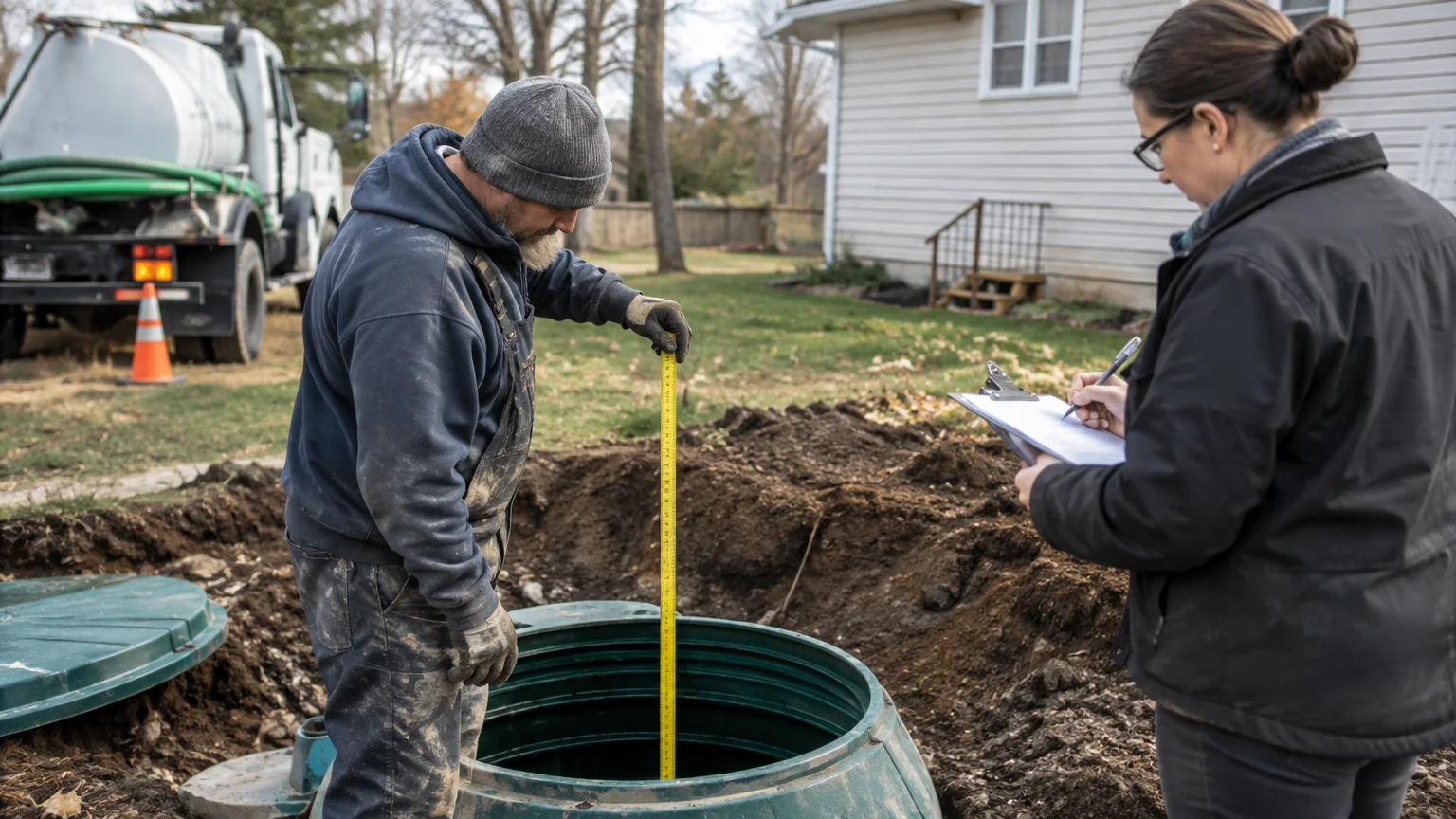
A property owner can look for a riser, lid, cleanout, or old service marker without digging. Before excavation, check for underground lines and use safe locating methods. A professional can confirm tank depth and location with the right tools.
How Can You Check the Septic Tank Size on Your Property?
The best way to check tank size is to review the permit and installation records. Then, have the details checked during an inspection. Records may show the tank capacity, location, drainfield plan, and approved bedroom count.
Start with the local health office or permit office. Some offices keep septic permits in property files or online systems. A county property search may help find the parcel, but tax records may not list tank size.
You can also search documents from a home purchase. Helpful records may include a septic permit, inspection report, as-built drawing, survey, repair bill, or installation receipt. Sellers, past owners, builders, and property managers may have copies.
A safe records checklist includes:
- The original septic permit
- The approved site or as-built plan
- Pumping and inspection records
- Documents from a sale or remodel
- Notes about the tank lid and access point
A professional inspection can check the tank location, likely capacity, condition, pipes, baffles, filter, and signs of trouble. The worker may need to uncover a lid or use other tools. Never enter a septic tank. The gases inside can kill you.
If records are missing, the tank may be measured or identified by its materials and access points. The result should still be checked against local rules before replacement or a home addition.
What Should You Confirm Before Installing or Replacing the Tank?
Before installing or replacing a tank, confirm the permit, approved capacity, setbacks, soil findings, access plan, and drainfield design. The work should match local rules and actual site conditions.
Setbacks are required spaces between septic parts and features such as wells, property lines, buildings, streams, and surface water. The exact spaces depend on local rules and the site. Do not rely on a diagram from another state.
Important questions include:
- What tank capacity is approved for the home?
- Does the project need a new permit?
- Where are the tank and drainfield located?
- Do planned changes still meet the required setbacks?
- Is there a reserve area for future repairs?
- Can pumping equipment reach the access lids?
Pumping and inspection records can help with future choices. They may show how fast solids collect, whether filters were cleaned, and whether past owners reported backups or odors. Records do not replace a current inspection, but they show useful history.
Replacement work may uncover old materials, damaged pipes, or a drainfield that needs help. The tank and drainfield should be reviewed as one system. A permit office, qualified inspector, or septic service worker can explain the next safe step.
For property owners and the wider area, Septic Tank Pumping Athens can review available information and help identify what needs professional confirmation. Regular maintenance and timely septic pumping may help reduce problems, but they cannot correct every system failure. Emergency pumping may be needed when sewage backs up or the tank overflows, while 24/7 service depends on the provider and the situation.
Frequently Asked Questions
Is a three-bedroom house always approved for the same tank size?
No. Local rules, water flow, soil, and system design can change the approved size. Bedroom count is often a starting point, not the whole answer. Check the property permit before installation, replacement, or a home addition.
How do you find septic tank records online?
Start with the county or local health office record system. Search by parcel number, street address, or owner name when available. Online files may be missing older records. You may need to ask the permit office for past permits, reports, or site plans.
Who performs a perc test?
A qualified soil worker, engineer, or other approved specialist usually performs or oversees a perc test. Local rules decide who may do the work. The test helps review soil drainage, but it does not decide tank size alone.
How deep should a septic tank be?
The tank should connect with the home sewer and approved drainfield. It must also remain easy to inspect and pump. Pipe level, soil, groundwater, slope, and local rules all affect depth. A professional should confirm the final level before digging.
Is a septic tank the same as a cesspool?
No. A septic tank is a sealed container that separates solids and sends liquid to a drainfield. A cesspool is an older type of wastewater structure that may let liquid pass through its walls. Local rules may limit, control, or require replacement of older systems.
Key Takeaways
- A three-bedroom home has no single septic tank size.
- Bedroom count, water use, soil, and local rules guide the design.
- Tank capacity and drainfield size are separate system parts.
- Depth depends on pipes, groundwater, soil, access, and permits.
- Records and a professional inspection give the best property answer.
Conclusion
The question of what size septic tank for 3 bedroom house owners need cannot be answered by bedroom count alone. Local rules, water flow, soil, drainfield limits, and site access all matter. Existing permits and inspection records are the best place to begin.
A homeowner can gather documents and look for safe access points without digging. Tank entry, deep excavation, wastewater contact, and system changes require trained help. Contact us to discuss septic tank pumping or an inspection with Septic Tank Pumping Athens.