The safest way to learn how to install septic tank riser is to find the tank, check its condition, and use parts that fit. A careful homeowner may do light digging and simple setup. Damaged lids, unsafe soil, buried utilities, or unclear openings need help from a septic professional.
Table of Contents
- Can a homeowner install a septic tank riser?
- What is a septic tank riser and why install one?
- What should you check before installing a septic tank riser?
- What tools and materials do you need to install a septic tank riser?
- How do you safely expose the septic tank lid?
- How do you measure and prepare the septic tank opening?
- How do you install and seal a septic tank riser?
- How should you backfill and finish around the riser?
- What can go wrong when installing a septic tank riser?
- When should you call a septic professional after installing a riser?
- Frequently Asked Questions
- Key takeaways
- Conclusion
Can a homeowner install a septic tank riser?
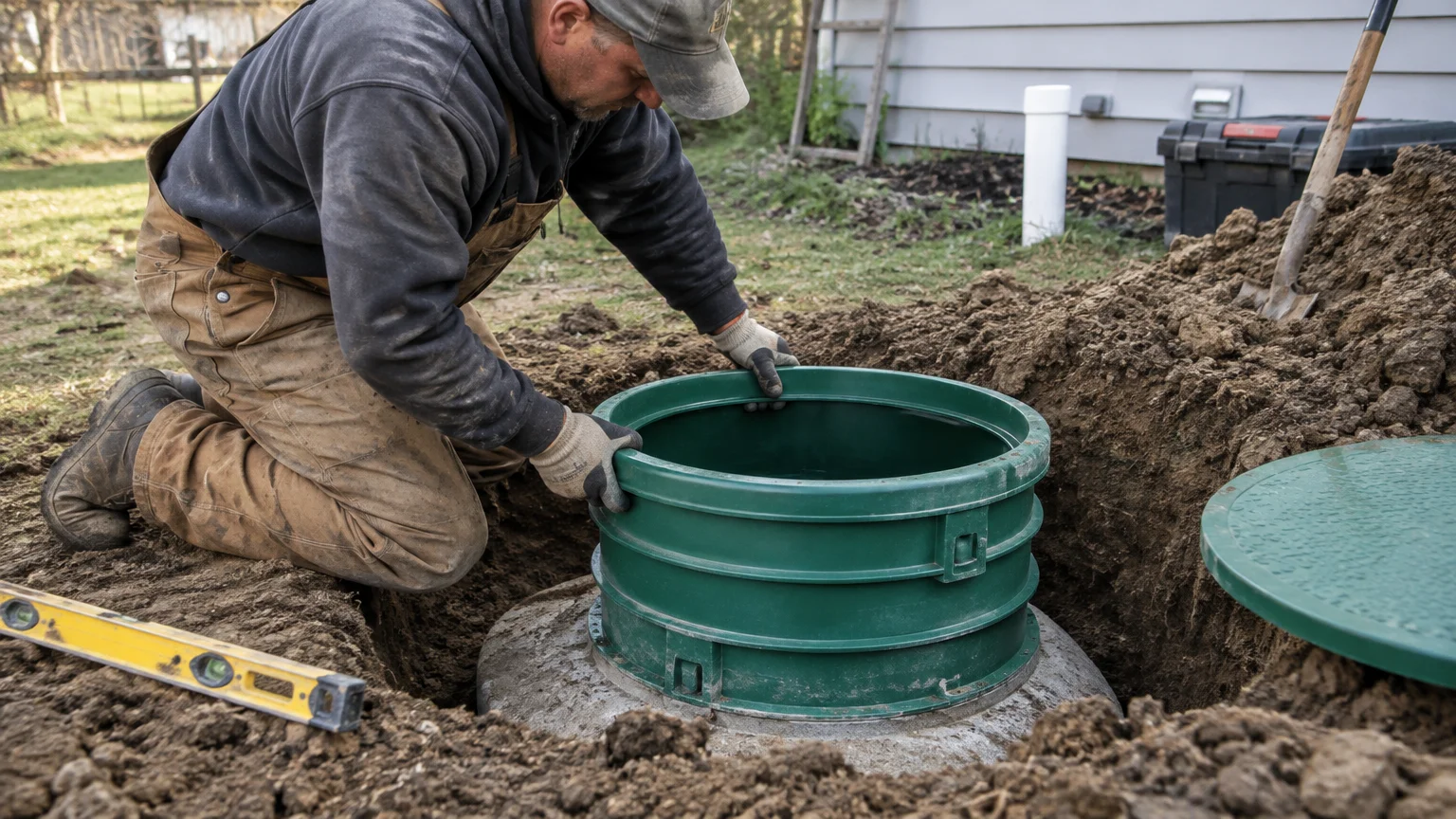
A homeowner may install a septic tank riser when the tank is easy to find, the opening is sound, and the work area is safe. The job still needs care. The riser must stay level, fit the opening, and keep soil and rainwater out of the tank.
A riser is a vertical section placed above a septic tank opening. It brings the lid closer to the ground. This makes future checks and septic pumping easier. It also means less digging when the tank needs service.
When the project may be suitable for a careful homeowner
The project may suit a careful homeowner who can follow the product directions. The tank should have a known location and a strong opening. The work area should also be clear, dry, and safe for anyone nearby.
Homeowners may do light digging, measuring, cleaning, and basic site work themselves. They should stop if the soil moves, the lid is broken, or the tank material is not clear. A septic tank can hold harmful gases. Never leave an open tank without cover or supervision.
A homeowner does not need a professional for every part of this work. Finding records, marking the area, cleaning the lid, and checking simple measurements may be safe tasks. The homeowner must still keep people and pets away from the opening.
When to hire a septic professional instead
A professional should handle the work when the tank is hard to locate or the opening is damaged. Help is also wise when the tank is near a driveway, building, wall, or drainage area. Local rules may require an approved part or a licensed installer.
Septic Tank Pumping Athens can help Athens property owners decide if a riser installation is safe. The team can help locate the tank, check the lid, and plan future septic pumping. A professional may also find problems that are easy to miss during digging.
What is a septic tank riser and why install one?
A septic tank riser is a pipe-like extension from the buried tank opening to a lid near the surface. It does not replace the tank. It also does not change how wastewater is treated. Its main job is to make service and inspection safer and easier.
A septic system collects wastewater from a home or building. Solids, liquids, and scum separate inside the tank. The liquid then moves toward the drainfield. Since the tank holds waste and gases, the access lid must stay closed and secure.
How risers improve access for inspections and pumping
A riser makes the tank easier to find before septic pumping. It may also reduce digging during regular service. Easier access helps a technician check the tank, lid, baffles, and tank walls more closely.
A riser does not remove the need for regular care. Property owners should still watch for slow drains, sewage smells, wet ground, or plumbing backups. The proper service plan depends on household use, tank size, solids, and system design.
A riser can also help new owners understand how to find the septic tank. The location should be written in property records and shared with anyone who may need service later.
Choosing compatible riser, lid, and safety components
The riser, lid, seal, and fasteners must work as one system. Parts should match the tank opening and the soil around it. The lid must resist movement and leave no unsafe gap for a child or animal.
Septic tanks may be made from concrete, plastic, fiberglass, or other materials. Each type may need a different connection method. A part made for one tank may not seal well on another. Read the product guide before removing soil.
A safe lid should be strong, secure, and easy for trained workers to remove. Do not use a loose board, scrap wood, or ordinary indoor cover. Those items can move, leak, or break.
What should you check before installing a septic tank riser?
Before installing a riser, confirm the tank location, tank material, opening size, and site safety. Begin with any records that are available. A permit, drawing, inspection note, or past service record may show the tank and drainfield.
The tank may not sit directly in front of the house. Inlet and outlet pipes can run at different angles. When records are missing, a professional locator may be needed.
Finding the tank and confirming its construction
Mark the suspected tank area and dig carefully by hand near the expected lid. Heavy equipment can crack the tank or harm buried pipes. Never force a lid that is stuck, broken, or too heavy to lift safely.
The tank may have more than one access point. A large opening may serve the main tank. A smaller opening may sit near the inlet or outlet. The riser must go on the correct opening. Guessing can limit future service or harm inside parts.
You should also check whether the tank is already damaged. Look for cracks, loose concrete, standing water, or signs of leakage. Do not use a damaged surface as a base for a new riser.
Checking local requirements, utilities, and site conditions
Underground utility lines should be marked before digging. Check for irrigation lines, cables, tree roots, and drainage paths too. Public lines may be marked by a local service. Private lines may need a separate check.
Rules for septic access vary by location. Check with the local health department or permitting office if the work changes the tank cover or ground surface. Athens properties can have different soil, slopes, and access problems. A plan that works in one part of Athens may not suit another site.
The main Athens area includes Downtown Athens, Watkinsville, Bogart, Bishop, Winterville, and nearby communities. Always check the actual property before choosing a riser height or digging method.
What tools and materials do you need to install a septic tank riser?
The materials depend on the tank and riser system. The basic set often includes a matching riser, a secure lid, a seal, and approved fasteners. Product directions should guide the choice of seal and hardware.
Do not improvise with loose stones, scrap boards, or an indoor cover. These items may shift, leak, or fail under soil pressure. A septic lid must stay stable while remaining accessible to trained workers.
Essential riser, lid, seal, and fasteners
The riser should fit the opening without forcing the tank wall. The lid should match the riser size and have a safe way to fasten it. The system may need a gasket, compression seal, or approved sealant.
The correct choice depends on the product and tank surface. Useful supplies may include clean bedding material, replacement fasteners, marking paint, and a temporary barrier. Keep the opening covered whenever work stops.
All parts should be clean before they are placed. Soil on a seal can leave a small gap. That gap may let water enter or gases escape around the lid.
Excavation, measuring, leveling, and safety equipment
A shovel, hand trowel, tape measure, level, soft brush, and clean cloth can help. Wear gloves, eye protection, strong shoes, and a dust mask. A helper can make lifting and lid work safer.
Never enter the tank or lean over the opening. Septic tanks may contain dangerous gases. You cannot judge the air inside by smell alone. If the hole is deep, narrow, wet, or unstable, stop and call a professional.
How do you safely expose the septic tank lid?
The safest way to expose a septic tank lid is to mark the area and dig slowly. Remove soil in thin layers. Hand digging gives better control near the lid, tank wall, and connected pipes.
Keep a clear boundary around the work area. Children, pets, and visitors should stay away. Never leave the opening uncovered during a break, even for a short time.
Marking the work area and digging carefully
Mark the expected lid location and leave enough room to work around the riser. Set grass, mulch, and topsoil aside for later use. Keep the removed soil far enough away that it cannot slide into the opening.
Stop digging when the edge of the lid appears. Check for cracks, movement, smells, water, and loose soil. A damaged lid should not be used as a work platform. If the tank is deeper than expected, stop and review the plan.
Use hand tools near the tank. Do not strike the lid or tank wall with a shovel. A small mistake can harm the tank or its pipes.
Cleaning and inspecting the tank opening
Clean the lid and nearby surface with a brush. Do not push dirt into the tank. Once the opening is clear, look for a strong rim, even surface, and signs of past leaks.
Do not enter or disturb the tank. A professional can inspect the inside with safe tools. If wastewater is near the lid, the tank is overflowing, or strong smells are present, cover the area safely and arrange service.
How do you measure and prepare the septic tank opening?
Accurate measurement matters before choosing or installing a riser. Measure the opening at several points. Check whether it is round, square, uneven, or damaged. The new riser must match the real opening, not only the old lid size.
The finished lid should stay above areas where water collects. It should also sit low enough to fit the yard. Ground level, slope, planned landscaping, and product design all affect the needed height.
Measuring the opening and determining riser height
Record the opening width, shape, rim condition, and distance below the planned ground level. Use a level to check whether the rim is even. Check each measurement again before buying or cutting parts.
A tall riser may need more support around its outside. A short riser may become covered after soil settles. The lid should stay visible and reachable without making a trip hazard. Its height must also allow future service equipment to reach it.
Preparing the surface for a watertight connection
The connection surface must be clean, firm, and free of loose concrete, soil, grease, and standing water. Damaged concrete may need repair first. A rough or broken rim can let groundwater enter the tank.
Install the seal exactly as the maker directs. Some systems use a gasket. Others use approved sealant or a mechanical connection. Do not mix materials unless they are approved for the tank and riser.
A watertight connection helps keep rain and soil out. It also helps keep gases inside the tank. If the rim cannot provide a sound connection, stop before installing the riser.
How do you install and seal a septic tank riser?
To install a septic tank riser, center it over the prepared opening. Keep it level, secure it with the approved method, and fit the matching lid. The assembly should not move when gently touched. A good seal keeps soil, rain, and runoff away from the tank.
Use clean hands and clean parts during the work. Dirt on the seal can leave a gap. Even a small gap may allow water to enter or gases to escape.
Positioning and securing the riser
Lower the riser carefully without scraping the tank rim. Keep its sides straight and its top level. Install fasteners in the order shown by the product guide. Use even pressure around the connection.
Do not over-tighten the fasteners. Too much force can crack plastic, strip hardware, or harm a concrete rim. If the riser will not sit evenly, stop. Do not use shims or loose blocks unless the maker allows them.
Check the riser from more than one side. A level top helps the lid sit correctly. It also reduces stress on the seal and fasteners.
Fitting the lid and checking the seal
The lid should sit fully on the riser and stay secure during a gentle test. Fasteners should stop movement but still allow future removal by a trained worker. The lid should not rock, bow, or show a gap.
A visual check cannot prove that the connection is fully watertight. After fitting the assembly, watch for movement, pooling water, or soil moving toward the lid. A professional can check a doubtful installation before it is covered.
How should you backfill and finish around the riser?
Add backfill slowly and evenly around the riser. The goal is to support it without pushing it out of level. Keep large rocks, broken concrete, and sharp debris away from the riser.
Use suitable soil in small layers. Press each layer gently by hand or with a light tool. Heavy equipment should not drive over the tank or riser unless the system was made for that load.
Backfilling without shifting or damaging the assembly
Check the riser level after each soil layer. Add soil on opposite sides to keep pressure balanced. If the riser moves, stop and find the cause before adding more soil.
The finished surface should send water away from the lid. Low areas can collect rain and send water into the tank. Do not pile soil high enough to bury the lid or block future access.
Protecting the lid from traffic, water, and landscaping
Record the riser location in property records and a simple yard plan. This can prevent future digging or planting over the access point. Deep-rooted plants, sheds, decks, and driveways should not cover the tank or drainfield without advice.
The lid should not sit where cars, trailers, or heavy equipment can cross it. A visible marker can help family members and future owners find the access point. Septic Tank Pumping Athens can help property owners plan access for future inspections and septic pumping.
What can go wrong when installing a septic tank riser?
Common problems include a poor fit, an uneven riser, a weak lid, or a leaking seal. Rainwater may enter the tank. Soil may wash into the opening. The lid may shift when someone walks nearby.
A riser can also reveal a larger problem. The tank may have a cracked top, damaged inlet, broken outlet, or unsafe cover. Installing a new riser without fixing that damage can leave the system unsafe.
Common problems with leaks, alignment, and unstable lids
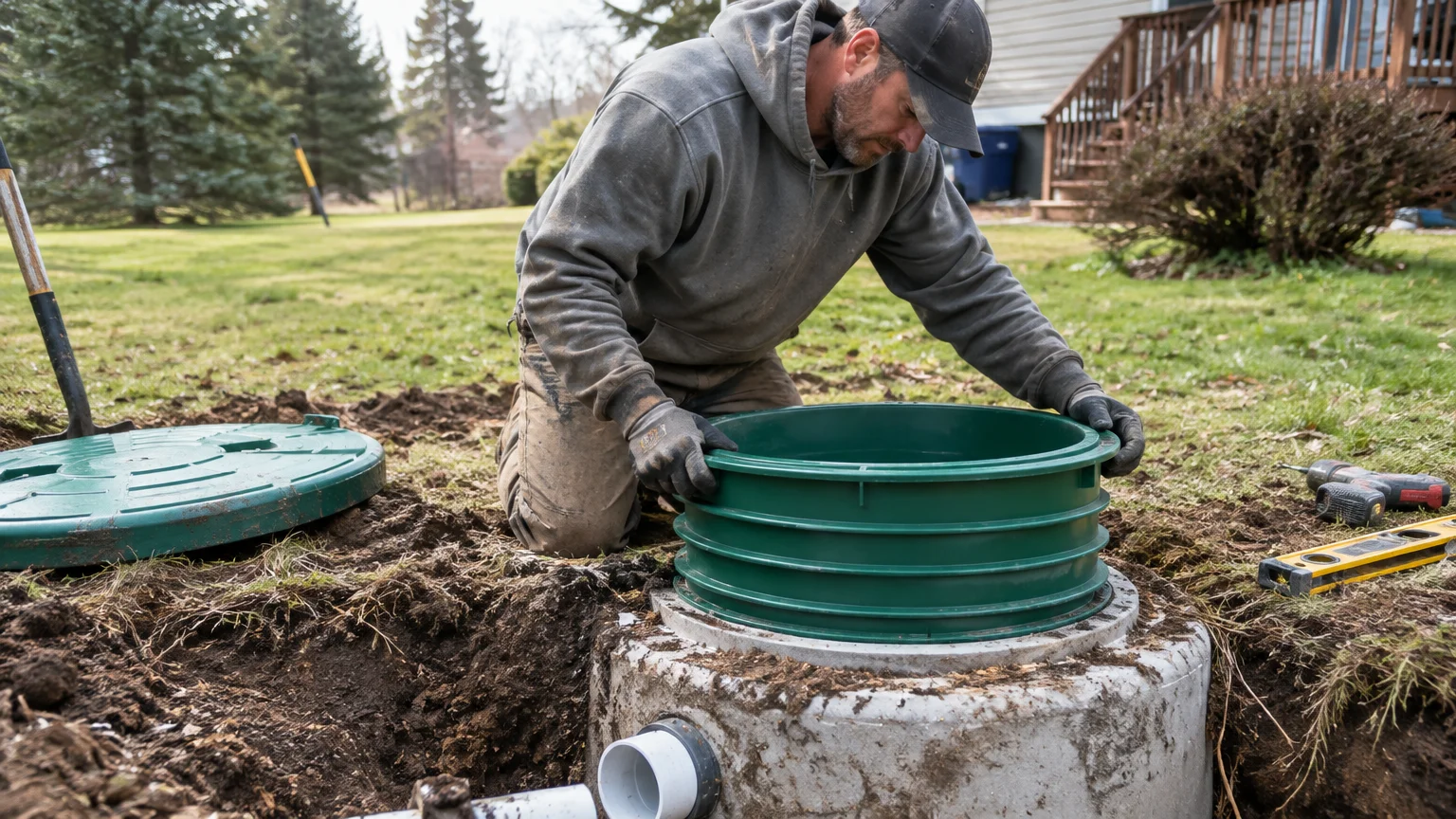
A crooked riser can put stress on the lid and seal. A dirty or poorly fitted seal may let groundwater enter. An unsecured lid can create a fall hazard. Correct these problems before finishing the ground.
Watch for standing water after rain, wet soil near the connection, bad smells, shifting parts, and repeated soil loss. These signs do not show one clear cause. They do show that the work needs a closer check.
How poor access or tank damage can affect the system
A riser that is too small may make future inspection hard. A riser over the wrong opening may hide the main service point. A buried or blocked lid can delay pumping and make urgent work harder.
Tank damage can let wastewater escape or groundwater enter. Both problems can affect system use. If drains slow, toilets gurgle, sewage backs up, or the yard becomes very wet, stop guessing and seek professional help.
A septic tank replacement may be needed in serious cases, but a damaged lid or riser does not always mean the whole tank needs replacement. A professional should check the actual condition first.
When should you call a septic professional after installing a riser?
A septic professional should inspect the work if the riser shifts, the lid will not seal, or water gathers around the connection. Help is also needed when the tank location is uncertain, the tank is damaged, or the opening is unsafe.
A professional can review the installation and check the tank. The next step may include septic pumping, checking baffles, inspecting pipes, or correcting the access assembly.
Signs the installation needs inspection or correction
The following signs need attention:
- A lid rocks, lifts, or cannot be fastened safely.
- Soil or water moves into the tank opening.
- Strong smells come from the riser after closing the lid.
- The riser leans, cracks, or pulls away from the tank.
- Wastewater, slow drains, or wet ground appear nearby.
- The tank opening is too deep, unsafe, or hard to reach.
Keep people away from a damaged opening. A temporary barrier may help, but it is not a lasting repair. Explain the problem clearly when service is arranged.
Planning future pumping, inspections, and maintenance access
A good riser makes future service easier, but it does not replace maintenance. Keep the riser location, tank records, and service notes together. Tell new owners and tenants where the tank is located.
The right service plan depends on the system and property use. A home with more people, frequent guests, or a garbage disposal may need closer checks. A professional can explain what to watch for and when septic pumping may be needed.
Frequently Asked Questions
How deep should a septic tank be before a riser is installed?
There is no single correct depth for every tank. The riser should bring the lid near the finished ground. It must also keep the lid safe from water and traffic. Tank depth, soil level, slope, and local rules all matter.
How far does a septic tank need to be from a house?
Setback rules vary by location, soil, tank design, and property layout. A tank may be near a home but still need space from foundations, wells, utilities, and drainage areas. Property records and the local health department can help confirm the approved layout.
Can a homeowner install a septic tank riser without pumping the tank?
Sometimes, but the tank should be checked first. A full tank, broken lid, or wastewater near the opening can make the job unsafe. Pumping may also make inspection easier. A septic professional can decide what should happen before installation.
Who performs a septic inspection after a riser is installed?
A qualified septic professional usually performs the inspection. The person may check the riser, lid, seal, tank opening, inlet, outlet, and visible site conditions. Local rules may say who can complete an official inspection. Keep the record with other septic papers.
Does installing a riser replace regular septic tank pumping?
No. A riser improves access, but it does not remove solids from the tank. Pumping needs depend on the tank, household use, system design, and sludge level. Better access can make future service easier and help a professional inspect the system.
Key takeaways
- A septic tank riser must match the tank opening and lid system.
- Homeowners may do simple preparation when the site is known and safe.
- Utilities, unstable soil, damaged lids, and tank cracks need professional care.
- The riser should stay level, secure, clean, and protected from surface water.
- A riser improves access but does not replace inspection or septic pumping.
Conclusion
Learning how to install septic tank riser starts with safety, careful measurements, and matching parts. Expose the tank slowly, prepare a sound connection, secure the lid, and backfill without moving the riser. Any doubt about the tank, soil, seal, or local rules means it is time to pause.
Septic Tank Pumping Athens helps property owners review septic access and plan service. Contact us to arrange help with a riser inspection or a safer long-term access plan.