Finding a drain field starts with checking septic records, locating the tank, and tracing the outlet pipe. The focus keyword, how to find a drain field, also means knowing when to stop. You can inspect the yard for clues, but digging, probing, and soil tests may need trained help.
Table of Contents
- Can a Homeowner Find a Drain Field?
- Where Is a Drain Field Usually Located?
- How Do You Find a Drain Field Step by Step?
- What Tools Can Help You Locate a Drain Field?
- What Can Go Wrong When Finding a Drain Field?
- How Can You Access a Drain Field Safely?
- When Should You Call a Septic Professional?
- Frequently Asked Questions
Can a Homeowner Find a Drain Field?
A homeowner can often find a drain field by checking records and the yard. This is a good first step when the ground is dry and the tank is known. A drain field, also called a leach field, is the soil area that receives liquid wastewater from a septic tank.
The work is safest when you only gather clues. You can check closing papers, ask the health department for records, or review a septic plan. You can also walk the property and compare the yard with that plan. These checks do not disturb pipes, soil, or buried utilities.
When is locating the system a reasonable DIY task?
A careful property search may work when the tank location is known. You can trace the outlet pipe away from the tank. The drain field is often past that pipe, but its shape depends on the system design and soil.
You can mark likely areas with small flags. Do not drive stakes deep into the soil. Do not drive heavy vehicles across the suspected field. Compacted soil may stop the field from taking in water well.
When is professional help the safer choice?
Professional help is safer when records are missing or several old systems exist. It is also wise when the field is deep, the ground is wet, or sewage is surfacing. An active septic alarm is another reason to call for help.
Septic Tank Pumping Athens can help Athens property owners choose a safe locating method. A trained worker can also explain whether you need to find the field, inspect it, or arrange septic tank pumping. These tasks are related, but they are not the same.
Where Is a Drain Field Usually Located?
A septic system drain field is often downhill or away from the tank. It needs good soil and open space for buried pipes. The exact spot depends on the lot, slope, soil, groundwater, and local approval records.
A drainfield is not always a flat rectangle. Some systems have several trenches. Others use one wide bed or a different design. A septic tank drain field may look like normal lawn, so surface clues are helpful but do not prove its location.
What records can reveal the field?
Property records are often the best place to start. A septic permit, site plan, inspection report, or sale paper may show the tank and field. Local health departments may keep septic records, but access rules can differ. Make sure the record matches the correct property.
The plan may show distances from the house, lot lines, wells, driveways, and other features. Old plans may be incomplete or wrong. Home additions, landscaping, repairs, and replacement systems may have changed the layout.
What landscape signs may reveal the field?
A field may have greener grass during dry weather. It may also have a long, level area with parallel strips. Small rises, shallow dips, or different grass growth may give you clues. These signs cannot confirm a field by themselves.
Standing water, sewage smells, or soft soil may point to a problem. They may also come from poor drainage, a broken water line, or rain runoff. Do not assume every wet patch is a drain field.
How Do You Find a Drain Field Step by Step?
The safest search starts with information, not digging. Confirm the property boundary, review records, and mark known features first. These steps can narrow the search while helping you avoid damage.
Step 1: Check records and ask past owners
Look for permits, inspection papers, service notes, and closing documents. A past owner, landlord, installer, or local office may know where the tank sits. Records may use terms such as leach field, absorption field, or septic drain field.
Compare the plan with the current yard. A house addition, pool, shed, driveway, or fence may show changes. If the plan and yard do not match, do not assume the old plan shows the whole system.
Step 2: Locate the septic tank first
The drain field is easier to find after you locate the tank. The tank is often near the main sewer pipe leaving the house. Cleanouts, inspection ports, and old access covers may also offer clues.
Never open a tank alone. Septic tanks can hold dangerous gases, and an open lid creates a fall hazard. A professional should handle tank access, pumping, and inspection.
Step 3: Trace the outlet pipe
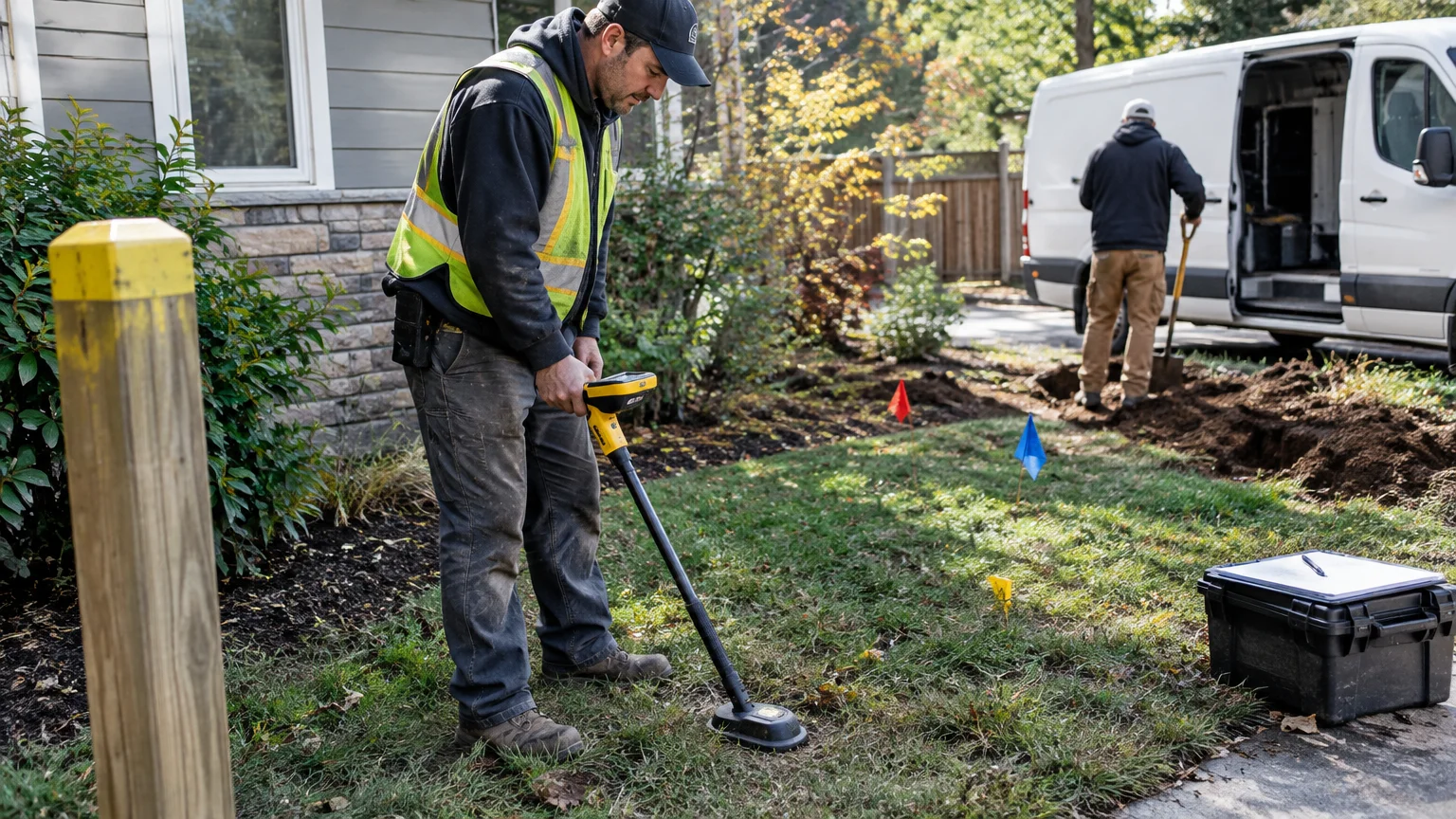
The outlet pipe carries liquid from the tank toward the field. It may run in a straight line, but old systems can have unusual layouts. A trained worker can trace the pipe with safe equipment when its path is unclear.
You can inspect the ground along the likely route. Look for settled soil, narrow grass changes, or a line that matches the site plan. Do not dig until underground utilities have been marked.
Step 4: Confirm the likely field area
After finding the route, compare the suspected area with the permit. The field needs enough room for its trenches or distribution area. Do not use it as a building site, parking area, or place for deep-rooted trees.
Stop if you cannot confirm the field without digging. Professional locating is safer than repeated probing. This matters even more on older properties with unknown repairs.
What Tools Can Help You Locate a Drain Field?
Basic tools can help with a careful visual search, but they cannot prove the exact location. A property plan, tape measure, marker flags, flashlight, and notebook are useful. Take photos and write down clues before changing the area.
A phone can help you compare the current yard with an old plan. It should not be used as proof of buried pipe locations. Mapping apps and property lines may be wrong or out of date.
What basic tools are useful?
A homeowner may use these items during a surface search:
- A copy of the septic permit or site plan
- A tape measure for checking marked distances
- Small surface flags that need no deep stakes
- A flashlight for viewing cleanouts and inspection ports
- A notebook for recording clues and unsure areas
Avoid shovels, powered augers, and deep metal rods until utilities and septic lines are known. Even a small hole can damage a pipe or create a safety risk.
When is electronic locating equipment needed?
Electronic equipment may help trace a buried pipe or locate a tank. A trained operator may use a probe, transmitter, camera, or another locating tool. The best choice depends on the pipe, system age, soil, and access.
Electronic locating does not replace a septic plan or inspection. It may show where a line runs, but it does not confirm the field’s condition. Septic Tank Pumping Athens can help property owners, from Downtown Athens to Watkinsville, Bogart, Bishop, Winterville, and nearby communities. The team can explain what the equipment can and cannot show.
What Can Go Wrong When Finding a Drain Field?
The biggest mistake is treating a guess as a confirmed location. A wet patch may come from a broken water line. A greener strip may be normal lawn growth. An old tank may no longer connect to the current system.
Other buried items can also confuse the search. Utility lines, irrigation pipes, old systems, and drainage trenches may look alike from the surface. Use the national 811 service before digging, since local marking rules and timing may vary.
How can digging and probing cause damage?
A shovel or rod can puncture a pipe, damage a distribution box, or hit a tank lid. It can also strike an electric, gas, water, or communication line. The damage may create danger right away or lead to repairs later.
Heavy equipment creates another risk. Cars, trucks, sheds, and filled pools can press down the soil above the field. Tree roots can enter pipes or change how water moves. Keep the area clear until the layout is known.
What signs suggest a field problem?
A failing field may show several warning signs. These include sewage smells, slow drains, wet soil, wastewater on the surface, or unusually green grass. One sign does not prove failure, but several signs need quick attention.
Keep children and pets away from wastewater on the ground. Do not cover the area with soil or chemicals. Covering the sign can hide the problem while wastewater keeps moving through the yard.
How Can You Access a Drain Field Safely?
Safe access means reaching the area without harming pipes, soil, people, or utilities. Clear light items only after you know the likely area. Do not dig, drive over the field, or remove covers without proper guidance.
The access needed depends on the task. A pumping visit may need the tank lid, not the drain field. An inspection may need the distribution box or other access points. Explain your goal before work begins.
How should the area be prepared?
Remove movable items such as toys, hoses, and small garden tools. Keep vehicles away from the suspected field. Pets and children should stay away during locating or inspection work.
Keep the area easy to reach in wet weather. Mud, standing water, and blocked gates can make service harder. Share records, known pipe locations, and past repairs with the professional.
What safety rules matter around septic parts?
Septic tanks can contain gases that cause serious harm or death. Do not enter a tank, lean over an open opening, or use a flame nearby. Keep covers secure, and treat damaged lids as urgent hazards.
Protective gloves do not make sewage safe to handle. Avoid contact with wastewater and wash exposed skin right away. Trained workers have the tools and skills needed for tank access and system tests.
When Should You Call a Septic Professional?
Call a septic professional when you cannot confirm the field safely or when the property shows failure signs. You also need help before digging, repairing, opening a tank, or testing the system. Early advice can prevent damage from guesswork.
Septic Tank Pumping Athens serves property owners across Athens and can help with locating questions, inspections, and septic tank pumping. The business can review the clues you have and explain the next safe step for the property.
What information should the homeowner gather?
Before arranging service, collect the septic plan, permit number, inspection reports, and notes about past work. Describe slow drains, wet areas, smells, alarms, or sewage backups. Photos of the yard may also help explain the issue.
Point out nearby wells, ponds, streams, driveways, additions, and large trees. Mention whether the property is occupied, rented, newly purchased, or being prepared for sale. Clear details help the professional plan a safe visit.
What should happen after the field is found?
Mark the field location on a simple property sketch. Record the tank, access lids, outlet line, distribution box, and field edges when known. This record can help future owners and service workers.
Do not use the field for building or deep planting. Regular septic care, careful water use, and quick action on warning signs can help protect the system.
Frequently Asked Questions
How deep should a septic tank be?
Septic tanks may be shallow or deeply buried, based on the site and installation. The depth can change after grading, landscaping, or soil settlement. Use records and professional locating methods instead of guessing. Never dig near a suspected tank before utilities and septic parts are identified.
What is a septic system?
A septic system treats household wastewater on the property. Wastewater flows from the building into a septic tank, where solids settle. Liquid then moves toward a drain field for soil treatment. The system also has pipes, access points, and soil that must work together.
Who performs a perc test?
A qualified soil worker, engineer, or approved septic designer usually performs or oversees a perc test. Local rules decide who may do the work. A perc test checks how fast water moves through soil. It helps show whether land may support a septic system.
How do you spell cesspool?
The standard spelling is cesspool. A cesspool is not the same as a modern septic system with a tank and drain field. Some older property records may use this word even when the current system has other parts. Local records can help explain the system type.
How far does a septic tank need to be from a house?
The needed distance depends on local health rules, site conditions, and the approved system plan. Setbacks may also apply to wells, property lines, buildings, and water features. Use the approved permit and local authority instead of copying a distance from another property.
Key Takeaways
- Start with septic permits, site plans, and past inspection records.
- Locate the tank before trying to trace the drain field.
- A leach field may look like ordinary grass and soil.
- Do not probe, excavate, or drive over an uncertain field.
- Call a professional when records are missing or warning signs appear.
Conclusion
Learning how to find a drain field starts with records, surface clues, and a careful search. A homeowner can gather useful information without disturbing the system. When the location is unclear, or sewage and wet soil appear, professional locating and inspection are safer choices. Septic Tank Pumping Athens helps Athens property owners protect their septic systems with clear, useful guidance.
If you are unsure what you found, contact Septic Tank Pumping Athens before you dig or disturb the area. Contact us to arrange help locating or inspecting the system safely.