Proper care for septic system health means using water wisely, keeping harmful waste out, protecting the drainfield, and arranging service when needed. Homeowners can handle simple checks and daily upkeep, but septic tank pumping, inspections, and repairs need trained help. These habits help protect homes and septic systems in Athens.
Table of Contents
- What does proper care for a septic system involve?
- Which septic system tasks can homeowners handle?
- When should a septic professional handle maintenance?
- How do you care for a septic system between pump-outs?
- How often should a septic tank be pumped and inspected?
- What can go wrong when septic maintenance is neglected?
- When should you call a septic tank pumping professional?
- Frequently Asked Questions
- Key takeaways
- Conclusion
What does proper care for a septic system involve?
Proper care combines safe daily habits, simple checks, and planned septic service. A septic system treats wastewater from a home. It usually has a septic tank, outlet parts, and a drainfield. The tank holds wastewater while natural steps separate solids, liquids, and scum. Good maintenance lowers strain and helps owners find small problems early.
How septic systems work and why maintenance matters
Wastewater flows from the home into the tank. Heavy solids settle at the bottom as sludge. Lighter waste floats as scum. Liquid leaves through an outlet and moves to the drainfield. Soil filters and treats that liquid before it moves farther into the ground.
The tank cannot hold solids forever. Sludge and scum slowly take up space. Solids may then move toward the drainfield and block its parts. Regular septic pumping removes this buildup before it causes bigger trouble. This is one of the most important parts of maintenance.
Which household habits protect the tank and drainfield?
Good habits are simple and steady. Fix leaks, spread laundry across the week, and keep grease, wipes, paint, chemicals, and medicine out of drains. Toilets should receive human waste and toilet paper only. The drainfield should stay clear of sheds, pools, patios, deep-rooted plants, and parked vehicles.
Grass is often a good cover for the drainfield. It can help manage surface water without adding heavy pressure to the soil. Septic Tank Pumping Athens helps property owners understand which habits fit their system and site. Athens homeowners should also learn where the tank and drainfield are located.
Which septic system tasks can homeowners handle?
Homeowners can safely manage many basic checks. They can watch for leaks, keep service records, protect access covers, and notice changes in drains or the yard. They can also control water use and keep harmful waste out of the plumbing.
A homeowner should not open a tank, enter a tank, dig near buried parts, or attempt repairs. Septic tanks can contain dangerous gases and harmful germs. Buried parts may also sit near utilities or weak soil. These jobs need trained help and proper equipment.
Routine inspections, records, and water-use monitoring
A homeowner can check visible pipes for leaks. Listen for toilets that keep running after a flush. A water meter can also show unusual water use. A sudden change may point to a leaking fixture or pipe.
Keep records in one safe place. Useful records include the last pump-out, inspection notes, tank location, repair history, and permits. A simple sketch can mark the tank, cleanout, and drainfield. This helps a professional work safely and find parts faster.
Spread out heavy water use when possible. Several loads of laundry in one day can send a large surge into the tank. That surge may add strain and lead to pooling near the drainfield. These simple checks do not require a professional.
What should tenants, buyers, and property investors check?
Tenants should ask who handles septic maintenance and how to report a problem. They should learn where vehicles, sheds, and other heavy items must stay away from the drainfield. Owners should give clear rules about wipes, grease, chemicals, and excess water.
Buyers and investors should ask for pump-out records, inspection reports, permits, and repair papers. They should also ask where the tank and drainfield are located. A professional review may be wise before a sale, especially when records are missing or warning signs appear.
These checks help people understand the system before taking responsibility. They can also help reveal whether the property may need septic tank replacement later. A trained inspection gives a clearer view than a guess from the surface.
When should a septic professional handle maintenance?
A septic professional should handle work involving the tank, buried pipes, electrical parts, sewage, or drainfield. Pumping needs proper tools and safe waste handling. Inspections also need trained judgment because important parts may be hidden or damaged.
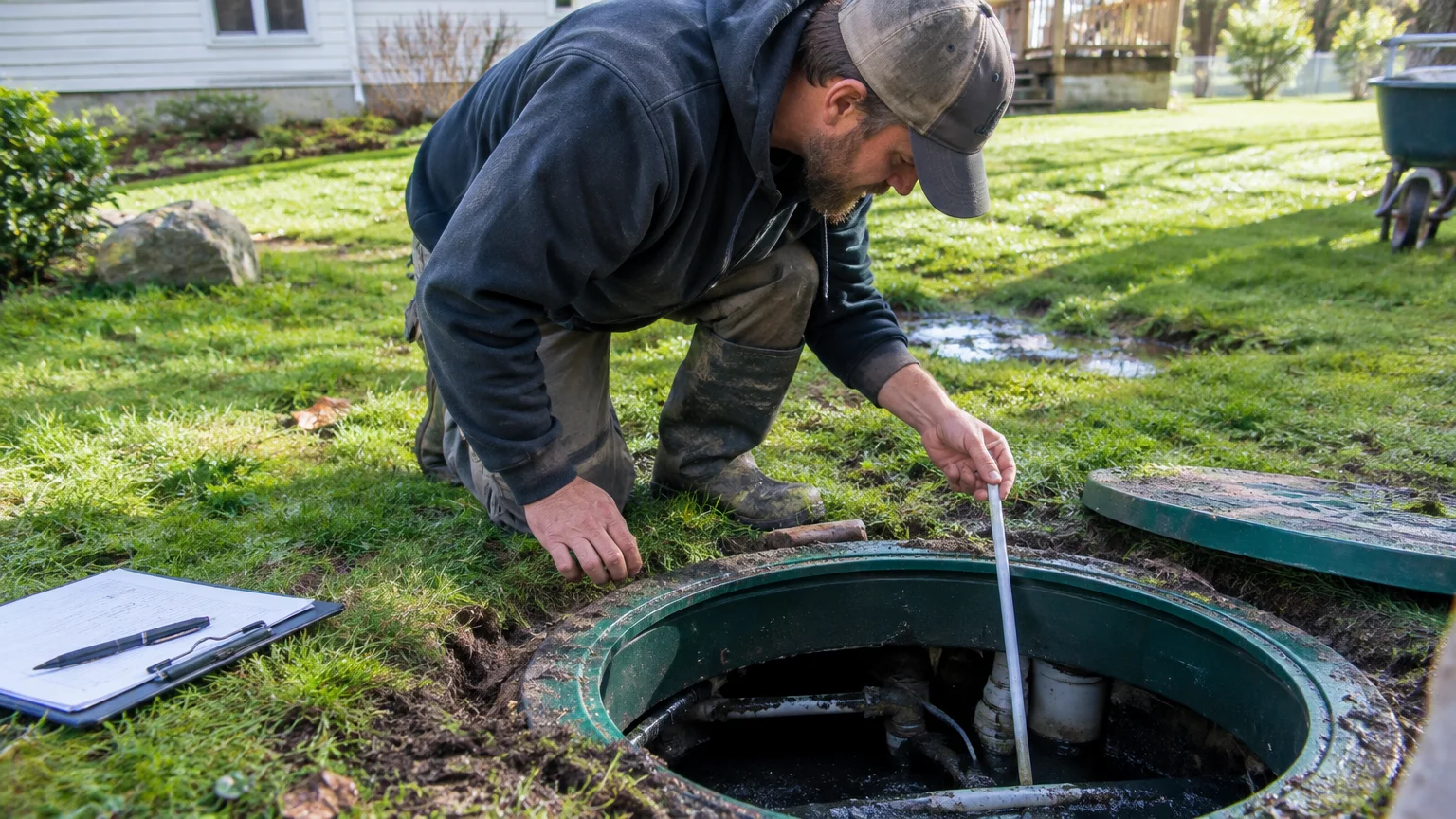
No one should enter a septic tank, even when it looks empty. Dangerous gases can collect inside. A professional can locate the tank, uncover access points, remove solids, inspect parts, and find signs of trouble without unsafe guesses.
Why pumping, tank inspections, and repairs require trained help
Septic pumping services may include checks of baffles, filters, lids, and the area around the tank. Baffles help guide wastewater through the tank. The exact work depends on the system design and its condition.
Repairs may involve pipes, pumps, controls, distribution parts, or the drainfield. These are not safe jobs for casual repair work. Digging can also be risky because tanks and pipes may sit near utility lines, roots, or weak soil. A trained provider can plan the work and handle wastewater safely.
What property owners should do before scheduling service
Gather service records and write down recent symptoms before an appointment. Note slow drains, sewage odors, wet grass, standing water, toilet backups, or fast grass growth. Tell the provider about recent plumbing work, additions, or changes in household use.
Keep the access area clear. Keep children and pets away from work areas. Move parked vehicles or stored items if equipment needs room. Septic Tank Pumping Athens can guide Athens property owners when a tank needs professional attention.
How do you care for a septic system between pump-outs?
Between pump-outs, control what enters the system, manage water use, and protect the drainfield. These steps help the system work as planned, but they do not replace pumping or inspection. Start by fixing dripping faucets, running toilets, and leaking supply lines.
Use septic-safe habits, but do not treat that label as a complete answer. Put grease, wipes, and chemicals in the right waste stream. Spread laundry, showers, and dishwasher use across several days. Keep tank lids secure and make access points easy to find.
Watch the yard for odors, soggy soil, or unusual green growth. Keep vehicles, buildings, and stored items off the drainfield. These steps are safe for homeowners to do themselves.
How products and waste affect septic performance
Products marked septic-safe still need careful use. They do not make a system able to accept paint, solvents, grease, or large amounts of harsh chemicals. Follow local waste rules for these materials instead of putting them down a drain.
Wipes may not break down like toilet paper, even when a package calls them flushable. Keep medicine out of household drains as well. Limiting harmful waste protects the natural treatment process. It also lowers the chance of blocked flow through the tank and drainfield.
How landscaping, vehicles, and construction affect the system
Roots can enter damaged pipes and affect flow. Deep digging can damage tanks, pipes, and distribution lines. Heavy vehicles can press down the soil above a drainfield. Compacted soil cannot accept wastewater as well.
Before adding a driveway, shed, pool, fence, or patio, find the septic parts first. Local approval or a site review may be needed. Each property has a different layout, so a recorded site plan is safer than a guess.
How often should a septic tank be pumped and inspected?
A septic tank should be pumped and inspected based on tank size, household use, wastewater strength, and solid buildup. No single schedule fits every home. A professional can review the records and suggest a plan for that system.
A smaller tank may fill faster than a larger tank serving the same number of people. More residents, frequent guests, a garbage disposal, and high water use can add solids faster. Older systems may need closer checks when parts wear or records are missing.
Part-time homes still need care. Low use does not remove sludge from a tank. Rentals, vacation homes, businesses, and large households may need plans that match changing use. Keep a record of each service and what the provider found.
The right schedule should fit the system, not a rule copied from another property. Regular maintenance can also help owners spot parts that may need repair before a full system failure.
Signs that the system needs attention sooner
Do not wait for the next planned visit when warning signs appear. Common signs include:
- Slow drains throughout the home instead of one blocked fixture.
- Sewage odors inside the home or near the tank and drainfield.
- Wet spots, standing water, or unusually green grass over the system.
- Gurgling toilets or wastewater backing up into sinks and tubs.
- Sewage near the tank, cleanout, or drainfield.
These signs can have more than one cause. A professional can test the system and find the source. Athens homeowners should act quickly when wastewater reaches the yard. People and pets should avoid contact.
A warning may point to a full tank, blocked pipe, leaking fixture, broken outlet part, or drainfield problem. Covering the area or guessing at a repair may delay the right help.
What can go wrong when septic maintenance is neglected?
Neglected maintenance can cause backups, odors, sewage exposure, pipe damage, and drainfield failure. Small problems often become harder to fix when wastewater keeps entering the system. Early action gives the owner more choices.
Excess solids can leave the tank and reach the drainfield. Grease can coat pipes and slow flow. Wipes may not break down like toilet paper. Harsh chemicals can harm the treatment process or system parts. Too much water can also overwhelm the system.
How water, weather, and soil conditions add strain
Heavy rain can add water to a damaged system or flood the drainfield. Compacted soil, blocked pipes, and broken distribution parts can stop wastewater from spreading well. Several slow drains may point to a full tank or blocked main line.
A damp patch may signal wastewater near the surface. Odors may show that gases or sewage are escaping. These conditions should be checked instead of hidden with soil, chemicals, or landscaping.
Keep people and pets away from sewage and standing wastewater. Do not cover the area with soil or treat it with chemicals. Those steps can hide the problem and make inspection harder. A professional can find whether the cause is inside the home, at the tank, or in the drainfield.
The next step may include pumping, cleaning, repair, testing, or another inspection. The work depends on the source and size of the problem. Emergency pumping may be needed when a full tank causes sewage to back up or surface.
When should you call a septic tank pumping professional?
Call a septic tank pumping professional when the tank is due for service, records are missing, or warning signs appear. Urgent signs include sewage backup, wastewater on the ground, strong sewage odors, and repeated drain problems. Professional septic tank pump services can help find the cause and protect the system.
A backup inside the home needs prompt attention. So does sewage near a home, walkway, ditch, or water source. Keep children and pets away. Limit water use until a professional gives direction. Septic Tank Pumping Athens serves property owners who need help with these concerns.
How to prepare for a professional evaluation and next steps
Do not open the tank alone or use drain chemicals to force flow. Chemicals may harm people, pipes, or septic parts. They can also make later work more dangerous.
Before service, find records, clear access, and write down recent symptoms. Mention the number of residents, recent guests, laundry patterns, and remodeling. A clear history helps the provider compare current conditions with past notes.
The provider may inspect the tank, outlet parts, filters, pipes, pumps, and drainfield. The next step may be pumping, cleaning, repair, testing, or a follow-up inspection. The final work plan is confirmed on a quote based on the system, access, parts, damage, and urgency.
Frequently Asked Questions
What is a septic system? A septic system is an underground wastewater system for properties without public sewer service. It usually has a tank and drainfield. The tank separates solids from liquid, while the drainfield lets treated wastewater move through soil. Proper care for a septic system helps these parts work together.
How far does a septic tank need to be from a house? The needed distance depends on local rules, site conditions, and system design. Do not rely on a general internet answer. Local health officials, permits, site plans, and qualified professionals can confirm the approved location for a property in Georgia.
How deep should a septic tank be? A tank should allow safe pipe flow and proper soil cover. Exact depth varies by design and site. Access lids should stay reachable. A professional can locate the tank and confirm its depth without unsafe digging.
Who performs a perc test? A qualified soil evaluator, engineer, or approved professional usually performs a percolation, or perc, test. The test checks how quickly soil absorbs water. Local rules decide who may perform it and when it is needed.
Who installs septic tanks near me? A licensed or locally approved septic installer usually handles tank installation. The right provider depends on local rules, system design, and site conditions. Property owners in Athens should check permits, qualifications, insurance, and past work records.
Key takeaways
- Daily habits matter: Keep grease, wipes, chemicals, and excess water out.
- Homeowners can check: Watch leaks, water use, records, odors, drains, and yard changes.
- Professionals handle tank work: Pumping, inspections, repairs, and digging need trained help.
- Protect the drainfield: Keep heavy vehicles, buildings, deep roots, and construction away.
- Act on warning signs: Backups, odors, wet soil, and standing water need prompt help.
Conclusion
Good septic care starts with small home choices and regular professional service. Owners can protect the system by managing water, keeping harmful waste out, and preserving the tank and drainfield area. Homeowners do not need a professional for basic leak checks, water monitoring, recordkeeping, or keeping the area clear.
Professional septic system pumping services still matter. Solids, hidden damage, and unsafe conditions cannot be judged safely from the surface. The best plan considers tank size, household use, site layout, access, soil, system age, and local rules.
When warning signs appear, a provider can find whether the cause is a plumbing issue, full tank, damaged part, or drainfield concern. A written quote confirms the recommended work before it begins. For property owners Septic Tank Pumping Athens offers practical guidance for septic care across the surrounding area, including Watkinsville, Bogart, Bishop, and Winterville. Contact us to arrange the next step for a septic pumping or maintenance concern.